Beyonce, J-Z and Solange: Family vs Partner Conflicts Galore
Dr Janet Hall was the guest expert on TV Channel 9 when the Beyonce conflict story hit!
Who else other than the author of Fight-Free Families knows about family conflicts?
Beyonce and Solange Knowles are famously close siblings … but the shocking footage of Solange viciously attacking Beyonce’s hubby Jay Z has raised questions about what exactly is going on in this family.
But whether this is their first altercation…or their relationship has always been strained….they wouldn’t be the first couple to have issues with their in-laws.
QUESTIONS:
Q. Dr Janet, how common is it for couples not to get on with their in-laws?
It’s very common for there to be friction between the loved partner and the in-laws.
Often they work through these over time, especially when grandchildren appear and the deeper blood ties are formed.
But sometimes the conflicts can last a lifetime.
Q. What are some of the most common reasons behind it?
With new partner and judgments from Mum and Dad it is typically that “no-one is good enough for their golden haired son or daughter”.
With the siblings like in the Jay-Z case it could be because of jealousy – the sister feeling excluded – or it can just be a personality clash where someone just doesn’t like the newcomer!
Sometimes it can be a real clash of values such as different religions, cultures or money and status.
Q. Can family disapproval be genuinely destructive to a marriage?
Oh yes – it can cause a family feud where people cut themselves off altogether from the other party.
Or for those who do attend special family occasions like weddings or 21st there is always a risk of stress and alcohol fuelling an altercation and sometimes this is even physical!
Q. When it’s your husband or wife not getting on with your siblings or parents, it puts you in a really difficult position. Should you always side with your spouse?
Yes you should take your spouse’s side always – so long as it is fair and reasonable. Of course if your spouse is being irrational, this needs counseling.
Q. What about when you decide to face the issue and communicate with the family. Should you and your spouse put on a united front when handling issues with in-laws?
You should never stage a confrontation unless you are very strong as a team.
You need to have your agreements clear and your intention needs to be reconciliation so that everyone wins in the long-term.
Sadly, sometimes you can only expect hostility and judgements however. In this case – just be polite and stay away from them!
GET DR Jan’s FIGHT-FREE FAMILIES BOOK NOW!
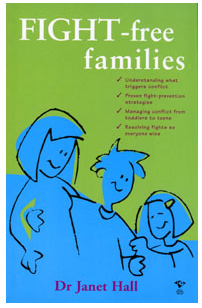
CLICK ON THIS LINK
http://drjanethall.com/shop/
Did you know that 85% of families have had their first fight before 9am in the morning?
And they often fight at dinner and especially before bed!
Fight-Free Families explains why people fight and gives terrific ideas for how to manage fights, but even better – avoid them. It is possible to have an (almost) fight-free family by creating an environment at home that supports the peaceful resolution of conflict.